

My balcony garden started, as most things in my life do, with a completely unrealistic ambition. I had visions of trailing vines, fat tomatoes, and something that looked vaguely like a Pinterest board. What I got, at least in the beginning, was a few sad pots, some overwatered basil, and a money plant that was clearly holding on out of sheer stubbornness.
That was a couple of years ago. Today, my balcony is genuinely green, mostly alive, and one of my favourite places in the flat. And if you are a Mumbai apartment dweller with a patch of outdoor space and absolutely no idea where to begin, this is for you.
Because here is what nobody tells you upfront: gardening in Mumbai is its own category. The humidity, the monsoon, the intense afternoon heat on west-facing balconies, and the salt air if you are anywhere near the coast. A plant that thrives in Delhi will absolutely not behave the same way here. You have to garden for this city specifically.
Start With What Mumbai’s Climate Actually Lets You Grow
Before you buy anything, stand on your balcony at different times of day and pay attention to the light. This single step will save you a lot of money and heartbreak.
East-facing balconies get lovely morning sun and are genuinely ideal for most plants. West-facing ones get brutal afternoon heat, especially from March to June, and need plants that can handle it. North-facing balconies are shadier and suit ferns, peace lilies, and money plants beautifully. South-facing is a mixed bag but generally good.
For Mumbai specifically, plants that do consistently well include: money plant (practically unkillable), areca palm, spider plant, snake plant, bougainvillaea if you have strong direct sun, mogra, which will reward you with the most beautiful fragrance, and herbs like tulsi, lemongrass, curry leaves, and mint.
What to avoid unless you really know what you are doing: roses (need more care than they are worth in Mumbai humidity), succulents on a west-facing balcony in summer (they will burn), and any plant that needs dry soil between watering, because Mumbai air stays damp for months at a stretch.
Go Vertical If Your Balcony is Small
Most Mumbai apartments do not give you a sprawling terrace. You get maybe forty to sixty square feet if you are lucky, and half of that is probably taken up by the drying stand. This is where vertical gardening changes the game entirely.
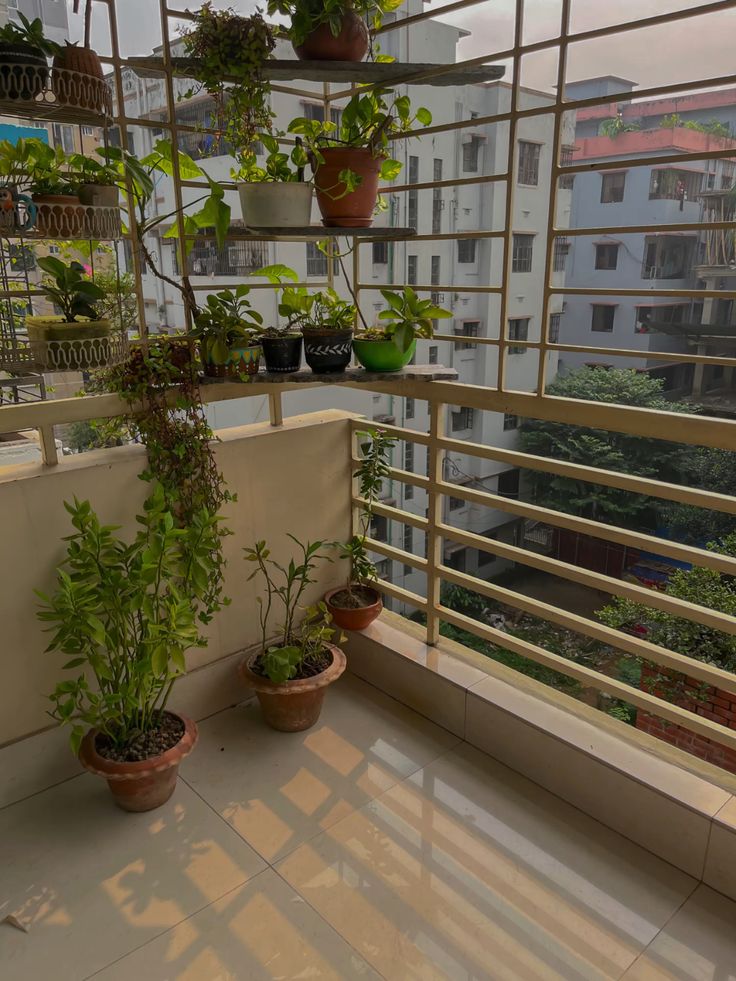
A single wall fitted with staggered planters can hold twelve to fifteen plants without touching your floor space. I use a combination of railing hooks for trailing money plants and a wooden ladder shelf for pots of different heights, and it genuinely makes the balcony feel like a proper green space rather than a storage area with some plants in it.
If you are going the DIY route, old plastic bottles painted and hung at intervals work surprisingly well for herbs and small flowering plants. Not the most Instagram-worthy solution, but effective and essentially free.
The Monsoon Will Test You
Every Mumbai gardener knows the June to September plot twist. Everything you spent months carefully nurturing suddenly has to survive four months of relentless rain, waterlogging, and fungal attacks.

A few things that help: make sure every pot has drainage holes, and if yours do not, get a drill and make some. Waterlogged roots kill plants faster than almost anything else. Elevate your pots slightly off the floor so water drains freely. Pull any pots with delicate plants slightly inward during very heavy rain. And accept, in advance, that you will lose something every monsoon. Everyone does. It is not a failure of gardening. It is just Mumbai.
The flip side of the monsoon is that it is also the best time for certain plants to absolutely take off. My bougainvillaea and mogra both go slightly wild between July and September, and the money plants grow so fast you can practically watch them move.
Herbs First if You Cook
If you are entirely new to balcony gardening and want to start somewhere that makes immediate sense, start with herbs. Specifically, start with the ones you actually use.
Tulsi, curry leaves, mint, lemongrass, and coriander all do well in Mumbai with basic care. Curry leaves take a while to establish, but once they do, you will never buy them from the sabziwala again. Mint spreads aggressively, so keep it in its own pot unless you want it to take over everything. Lemongrass is practically indestructible and also keeps mosquitoes away, which is a completely separate and very welcome benefit in this city.
There is something genuinely satisfying about walking to your balcony to snip fresh tulsi for chai or grab a few curry leaves for tadka. It is a small thing, but it makes you feel very sorted in a way that is disproportionate to the actual effort involved.
Make It a Space You Want to Sit In
This is the part people skip when they think about balcony gardening, but I think it is the whole point. The plants are lovely, but if your balcony is not a place you actually want to spend time, you will neglect the garden and eventually abandon the project.

Even if it is small, add one thing to sit on. A floor cushion, a folding chair, a small stool. Put your plants around it rather than in front of it. Add some string lights if your balcony allows for it. Mumbai evenings, especially post-monsoon from October onwards, are genuinely beautiful and a balcony you can sit in at 6pm with a cup of chai is one of those simple pleasures that costs almost nothing and delivers enormously.
My balcony is maybe fifty square feet. I have a small cane chair, a few stacked pots, a railing full of money plants, and a mogra that smells extraordinary in the evening. It is not a Pinterest garden. But it is mine, and I am out there every single day.
One Last Thing Before You Buy Everything at Once
Do not buy twenty plants in one trip. I know the nursery near you is tempting, and everything is cheap, and you have ambitions. But start with five to seven plants, learn what they need, and add more once you have a sense of how your balcony works.
Build it slowly. Lose a plant or two. Replace them with something more suited to your light conditions. And within a season, you will have a balcony that looks like it belongs to someone who has always known what they are doing.
Even if, like me, you absolutely did not.
Tell me in the comments what you are growing on your balcony right now. Always looking for new ideas, and also moral support during the monsoon season.


5 Comments Add yours